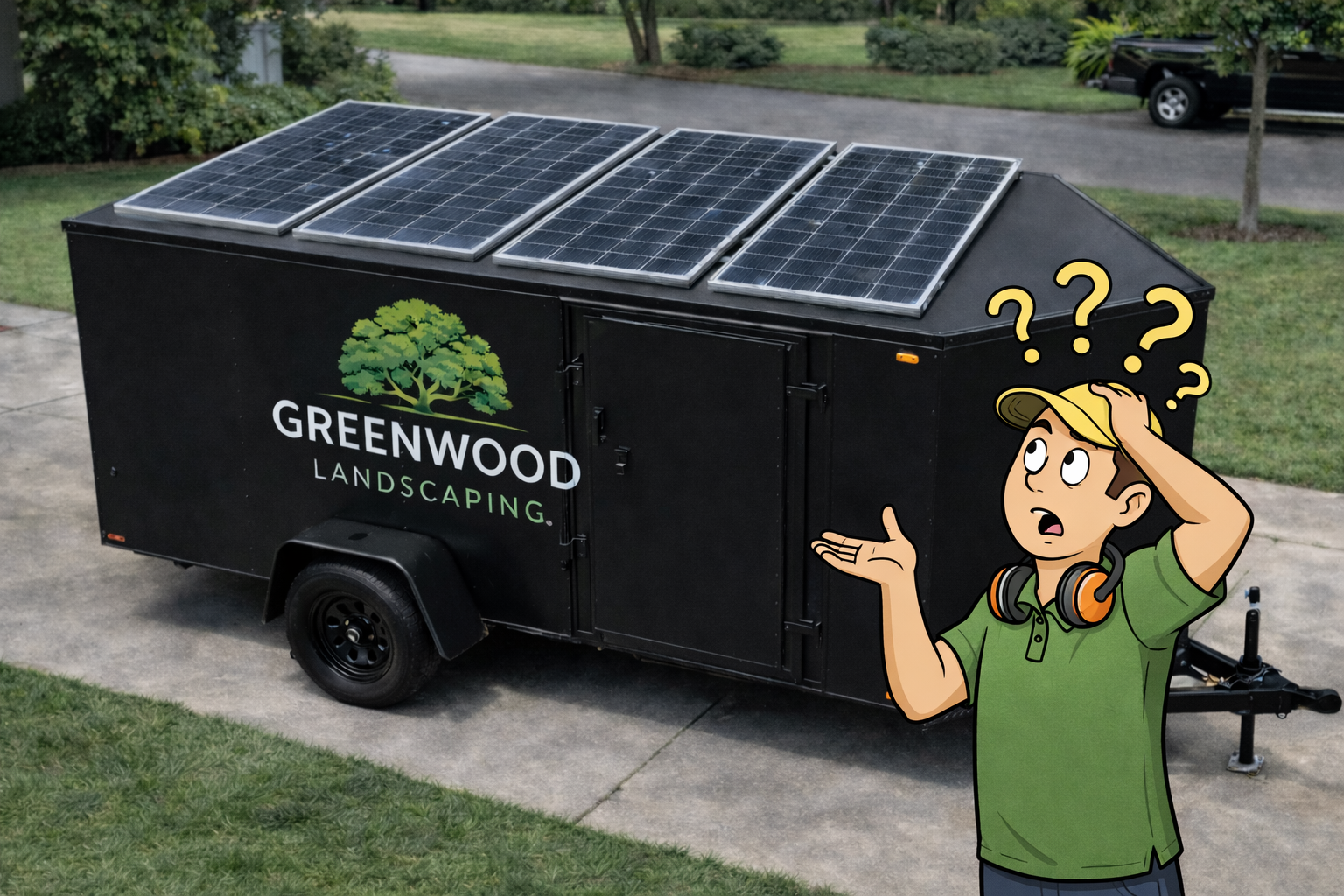

How Much Power Do You Really Need in a Utility Trailer?
One of the most common mistakes people make when planning a utility trailer power system is
guessing how much power they need.
Overestimate, and you overspend on equipment you may never use. Underestimate, and you end up
with a system that can’t keep up with real-world demands.
In this guide, we’ll break down how to realistically determine your utility trailer power needs
based on how the trailer is actually used.
Why Power Sizing Matters in a Utility Trailer
If you’re coming from an RV background, it’s important to understand that utility trailer power systems are designed very differently.
We break down those differences in detail in our guide on utility trailer vs RV electrical systems article
Utility trailers are not powered for comfort — they are powered for work.
Unlike RV electrical systems, utility trailer power systems must handle sustained loads,
high startup currents, and long workdays without failure.
Correct sizing ensures:
- Reliable tool and equipment operation
- Long battery life
- Stable inverter performance
- Minimal downtime on job sites
Step 1: Identify What You’re Powering
Start by listing everything that will draw power inside the trailer.
Common utility trailer loads include:
- Power tools and battery chargers
- Compressors or specialty equipment
- Interior and exterior lighting
- Refrigerators or freezers
- Starlink and networking equipment
- Computers, monitors, and mobile office gear
Each of these loads contributes differently to overall system demand.
Step 2: Understand Continuous vs Peak Loads
Not all power usage is the same.
Some loads run continuously, while others create short bursts of high demand.
Examples of continuous loads:
- Lighting
- Networking equipment
- Refrigeration
Examples of peak or surge loads:
- Power tools starting up
- Compressors cycling
- Microwaves or specialty equipment
Your inverter must handle peak demand, while your battery bank must support continuous runtime.
Step 3: Estimate Daily Energy Use
Power systems are sized using energy over time, not just instantaneous wattage.
For each load, estimate:
- Power draw (watts)
- Hours used per day
Multiply watts by hours to calculate watt-hours per day.
For example:
- 500W tool charger used 2 hours = 1,000Wh
- 100W lighting used 6 hours = 600Wh
Add all loads together to determine total daily energy consumption.
Step 4: Size the Battery Bank
Battery capacity determines how long your trailer can operate without charging.
Most utility trailer systems are designed for:
- One full workday off-grid
- Or multiple partial days without recharge
Lithium batteries are commonly used because they:
- Provide usable capacity without voltage sag
- Handle high discharge rates
- Recharge efficiently from solar or shore power
Battery sizing should always include a buffer for unexpected loads and cloudy days.
Step 5: Don’t Forget Solar and Charging Sources
Solar panels help offset daily energy use, but roof space is limited on most utility trailers.
A well-designed system balances:
- Battery capacity
- Solar input
- Shore power charging
- Optional generator integration
Relying on solar alone without proper sizing often leads to performance issues.
Common Power Sizing Mistakes
Some of the most common mistakes include:
- Only sizing for average loads, not peak demand
- Ignoring tool startup current
- Underestimating daily runtime
- Assuming solar will cover all usage
These mistakes often lead to system redesigns later.
So, How Much Power Do You Actually Need?
There is no one-size-fits-all answer.
A light-duty utility trailer may need a modest system, while a contractor trailer running tools
all day requires a much more robust setup.
The key is designing around real usage, not assumptions.
Need Help Sizing Your Utility Trailer Power System?
If you want a system that works reliably without overspending, professional system design
makes a major difference.
Learn more about custom utility trailer power system design here
A properly sized system saves money, improves reliability, and keeps your trailer productive
wherever the job takes you.


