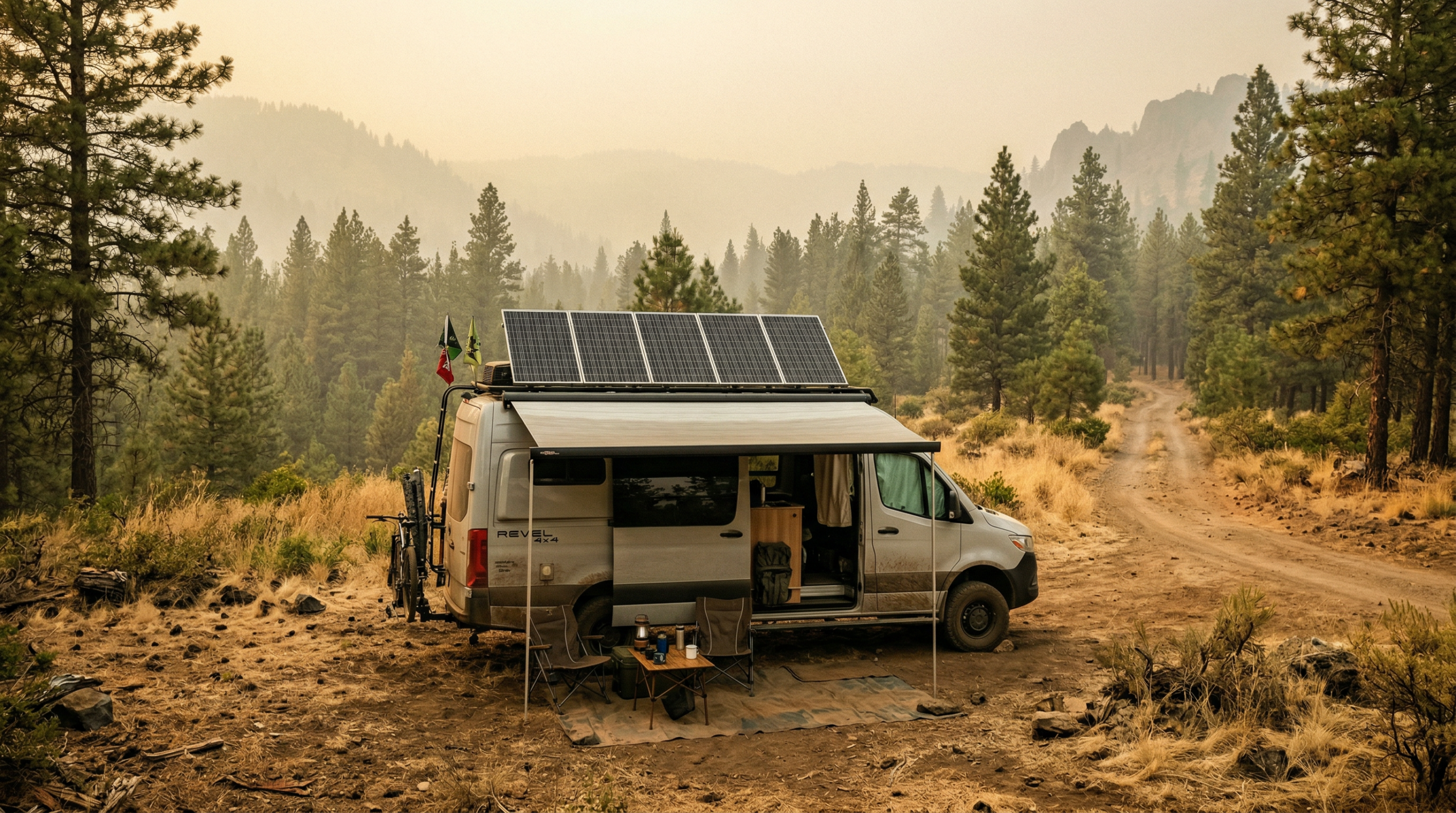

Oregon Snowpack 2026: Why Boondockers Should Pay Attention
The Oregon snowpack 2026 levels are near historic lows, and that could have real consequences for how people boondock this summer. For many RV owners, the generator is still the safety net. Solar helps, but the generator is what gives people confidence when batteries run low, clouds roll in, or a trip lasts longer than expected.
This year, that assumption deserves a closer look.
Oregon Snowpack 2026 and What It Means for Boondocking
According to the USDA NRCS Oregon Water Supply Outlook Report (March 1, 2026), Oregon’s statewide snow water equivalent is the second lowest in the 46-year SNOTEL record, behind only 2014–2015. Snowpack levels are at or near record lows across most major basins in the state.
Here’s what that looks like across Oregon:
- Willamette Basin: 27% of normal
- Upper Deschutes-Crooked: 27%
- Hood-Sandy-Lower Deschutes: 32%
- John Day Basin: 33%
- Umatilla-Walla Walla-Willow: 37%
- Grande Ronde Basin: 44%
- Klamath Basin: 24%
- Rogue-Umpqua: 24%
- Malheur Basin: 25%
- Owyhee Basin: 18%
In Central Oregon, the Upper Deschutes-Crooked Basin at just 27% of normal is especially relevant for RVers who spend time in that region.
This is not a localized issue. It’s a statewide signal.
Low Snowpack Is Not Just a Water Story
Most people think of snowpack in terms of water supply. But for boondockers, it also signals something else:
- Earlier dry-out of vegetation
- Increased wildfire risk
- Longer fire season
- Higher likelihood of public land restrictions
According to Drought.gov, a large majority of western snow monitoring stations were already experiencing snow drought conditions in early 2026.
That doesn’t guarantee restrictions everywhere—but it does increase the probability.
Why This Matters for Generator-Dependent Boondockers
If your RV setup depends heavily on a generator, you’re relying on something that may become more regulated right when conditions get dry and fire-sensitive.
Public land agencies already make this clear.
The U.S. Forest Service states that fire restrictions can impact:
- Generator use
- Campfire use
- Equipment operation
- Where and how you can camp
👉 View Forest Service restrictions info:
At the same time, battery and solar-powered systems are often exempt from these restrictions.
That distinction matters more than most people realize.
Generator Restrictions Can Get Specific
Restrictions are not always “on or off.” Often they become more complex before they become prohibitive.
For example, Central Oregon fire restrictions have required generators to:
- Be equipped with an approved spark arrestor
- Be elevated or attached to a vehicle
- Be used only in cleared areas (typically a 10-foot radius)
👉 Example of Central Oregon restrictions:
That means even when generators are technically allowed, they may be harder to use in real-world camping situations.
Why RV Solar Becomes More Important in 2026
A properly designed RV solar system removes your dependence on combustion-based power.
That means:
- No fuel storage
- No noise
- No exhaust
- No compliance requirements
- No waiting for generator windows
Solar and lithium battery systems give you consistent, quiet power every day the sun is available.
In a normal year, that’s convenient.
In a year like Oregon snowpack 2026, it’s a strategic advantage.
The Better Question to Ask This Season
This isn’t just about whether generators will be banned.
The better question is:
What happens if your generator becomes limited exactly when you need it most?
Low snowpack increases the likelihood of tighter conditions, and if your system depends on a generator, that creates risk.
Final Thoughts
The Oregon snowpack 2026 situation should make RV owners think more seriously about how independent their setup really is.
Low snowpack means:
- Less margin in the landscape
- More pressure during fire season
- Greater uncertainty for generator-based setups
The best time to upgrade your system is not after restrictions show up.
It’s before they do.
Ready to Reduce Generator Dependence?
If your current setup depends on a generator to stay comfortable off-grid, now is the time to evaluate your solar and battery system.
A properly designed setup will:
- Let you camp longer
- Give you more flexibility
- Reduce your reliance on fuel and noise
- Keep you independent, even during fire season
👉 Learn more about custom RV solar systems:
👉 Try the RV solar calculator:


